When a person collapses in your office or a kid starts choking in a childcare room, no one cares the number of modules your group has actually enjoyed or just how rather the certificates look. What issues is whether the individual closest to them can act, calmly and correctly, in the very first two minutes.
That is where express first aid training earns its maintain. Done properly, a fast first aid course provides people the confidence and skills to act, without dragging them unemployed for a complete day or even more. Done improperly, it produces a pile of certifications and an incorrect feeling of security.
I have spent years viewing both play out in workplaces, storage facilities, building and construction sites and very early knowing centres. The pattern is constantly the exact same: it is not the length of the course that makes the difference, it is the focus, the realism and just how well the training fits the workplace.
This short article goes through just how to use express first aid, CPR training and short-format refresher programs to construct a genuinely much safer workplace, without debilitating your roster or blowing the training budget.
What "express" really implies in first aid training
"Express" or "fast" first aid courses are commonly misunderstood. Lots of people presume "shorter" indicates "much less serious" or "thinned down". For the most part, express first aid training is not lighter, it is smarter.
Modern first aid and CPR courses are generally developed around blended distribution:
- Pre course online discovering, complied with by a brief, intensive practical session Shorter, focused refresher sessions for people that currently have a first aid certificate Modular options such as standalone express cpr courses or express child care first aid units that target details risks
The understanding parts that utilized to occupy hours in a classroom now sit online. Participants full videos, readings and tests at their very own rate, after that get to the assessment all set to spend their restricted face‑to‑face time doing, not listening.
The crucial question is not "The length of time is the course?" however "What practical skills will my staff walk away with, and how well will they keep them under tension?"
If the carrier can answer that clearly, with a framework that values your functional restraints, after that express first aid courses can be an asset as opposed to a shortcut.
Why speed issues for workplaces
In a best world, every person in your organization would certainly complete a full‑day first aid and CPR course, plus routine scenario‑based refreshers. In truth, staffing, shifts and price hinder. Managers request "the fast first aid course near me" since losing personnel for a whole day is not feasible.
The right express first aid training resolves several problems at once.
First, it lowers downtime. Pulling 3 people off a tiny group for 8 hours can maim operations. A half‑day express first aid course, backed by pre‑learning, allows you turn team through without blowing up the roster.
Second, it elevates protection. If the only individuals with a first aid certificate are your assigned first aid police officers, the system fails whenever they get on leave or working off site. Fast first aid training and brief cpr courses make it practical to educate a broader piece of the workforce, so every shift and area has a person qualified nearby.
Third, it enhances realism. A suitable express first aid course cuts the fat. As opposed to drifting right into rarely appropriate concept, the instructor spends more time on realistic scenarios: an electrical melt on the factory floor, a seizure in reception, or an asthma strike in the warehouse.
The result is not just faster certification. It is a greater percentage of your people who can manage genuine emergencies.
What needs to an express first aid course in fact cover?
If you are weighing different fast first aid courses, look much less at the brand on the certificate and even more at the actual web content and assessment.
For a core workplace course, also an express first aid alternative need to accurately cover:
Basic life support and CPR. High‑quality cpr training is the non‑negotiable centre of any kind of first aid and cpr course. That means technique on adult and youngster manikins, correct compression depth and price, risk-free rescue breaths or compression‑only CPR where suitable, and certain use an automated external defibrillator (AED).
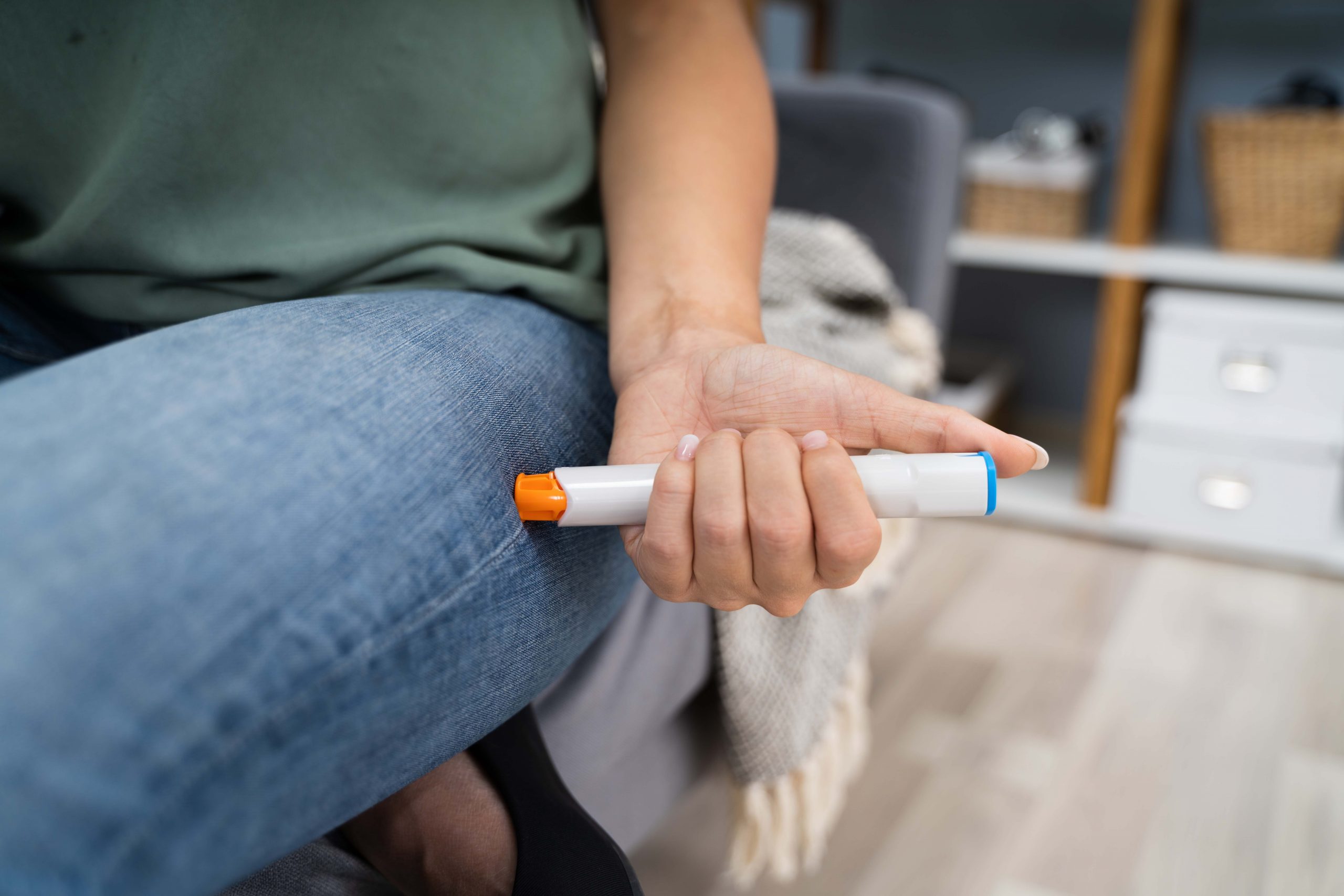
Recognition and response to typical clinical emergency situations. At minimum, team must recognize just how to acknowledge and reply to chest pain symptomatic of cardiac arrest, stroke signs, difficulty breathing or asthma, diabetic person emergency situations, seizures and allergic reactions consisting of anaphylaxis.
Trauma and office injuries. This includes extreme bleeding control, basic injury treatment, cracks and sprains, head injuries, burns and eye injuries. In guidebook or commercial atmospheres, this part of the first aid training should be tailored to most likely dangers such as crush injuries or entrapment.
Choking and air passage administration. Particularly in hospitality and child care, choking is a plausible and high‑stakes event. Express cpr training commonly doubles down below, with duplicated practice for conscious and unconscious choking in adults, youngsters and infants.
Safety, interaction and handover. First aid is not just about hands‑on skills. Staff need to know exactly how to call for aid, coordinate with associates, take care of spectators, and hand over plainly to paramedics.
An express first aid and cpr course that leaves any one of these voids is not efficient, it is insufficient. Shorter duration is acceptable, however left out basics are not.
The duty of childcare‑specific express training
Childcare settings are their very own globe. Ratios are limited, staff turnover can be high, and the threat account is various from a conventional office or warehouse. You have smaller sized airways, creating body immune systems, and constant movement.
That is why appropriate express childcare first aid training is so useful. A generic first aid course may spend 10 minutes on paediatrics. A committed express childcare first aid course spends most of its time there.
The better express child care first aid courses concentrate on:
Paediatric CPR and choking. The strategies and the emotional load vary when the client is a young child or infant. Repeating and realistic manikins matter below, specifically in an express format.
Asthma and anaphylaxis monitoring. Early learning centres today see increasing varieties of kids with asthma and severe allergic reactions. Educators require drilled regimens: where the medicine is kept, who provides it, that calls the ambulance, who handles the various other children.
Common childhood years injuries. Falls from play devices, head knocks, cuts, nosebleeds, attacks and hurts. The instructor ought to have the ability to reference real situations from centres, not just the common first aid manual.

Documentation and interaction with family members. Child care team run in a more controlled setting. They need to recognize occurrence reporting, communication with moms and dads and just how their first aid activities intersect with solution policies.
An express child care first aid course that mixes targeted on-line pre‑learning with a focused practical session can cover all of this without pulling an educator out of the area for a whole day. In solutions where ratios are already a daily challenge, that is the difference in between planning and chaos.
How to make a decision in between various express and fast options
Most carriers currently use a number of flavours of fast certification: full first aid courses, express cpr courses, fast cpr correspondence course, and integrated first aid and cpr training classes. The selection depends upon where your people are starting from and what your threats look like.
If staff have actually never ever learnt first aid prior to, a full first aid and cpr course, even in express style, is cpr courses Adelaide appropriate. The on-line theory will certainly lug even more weight below, and you desire a practical session long enough for repeating and assessment.
If team already hold a current first aid certificate, a fast cpr correspondence course can be sufficient annually, with a full express first aid course every couple of years relying on your regulative framework. Numerous offices now schedule annual express cpr training across all staff and a much deeper first aid course for designated first aid officers.
If various duties deal with different threats, modular express first aid training makes sense. Office‑based team might require cpr courses plus fundamental first aid, while maintenance or field team complete advanced trauma situations. Childcare and education and learning teams complete express childcare first aid rather than a generic program.
The smartest programs I have actually seen begin with a simple threat and coverage map, not the brochure of a training company. Once you understand what you are really attempting to protect versus, you can select the fast first aid training mix that fits.
Where fast fails: typical pitfalls
Not all brief courses are developed equivalent. I have actually strolled right into workplaces happy with their wall surface of certificates, just to discover personnel who can not bear in mind where the AED is, not to mention just how to attach the pads.
Fast first aid, when done severely, stumbles in a couple of foreseeable places.
First, overreliance on video. Pre‑course online components are useful, but they do not replace functional mentoring. If the face‑to‑face session is primarily a video clip and a quick multiple‑choice test, you are denying training, you are purchasing paperwork.
Second, impractical scenarios. Individuals remember what really feels actual. If the express first aid course makes use of sterilized, scripted examples, personnel will certainly battle to transfer their discovering to an unpleasant, loud work environment event. Trainers require to be comfortable adapting situations: a crush injury on the loading dock, a chemical sprinkle in the laboratory, an employee with upper body pain at 7 am prior to the remainder of the group has actually arrived.
Third, inadequate proportions and devices. One fitness instructor and 2 manikins for twenty individuals is not training, it is throughput. In an excellent express cpr course, everybody needs to have enough time on the manikin to develop muscle memory, not just touch it once.
Fourth, no web link back to work environment treatments. Team leave of the course bring generic understanding, but no clear concept exactly how it fits with your specific emergency strategy, evacuation treatments or incident reporting tools.
If you are paying for training, you are qualified to ask hard questions about all of these. A trusted express first aid training service provider will invite them.
What a great express first aid session really feels like
People typically ask just how they can inform if their fast first aid course was "good enough". Speed is not the right procedure. Focus rather to what is occurring in the room.
A solid express first aid or express cpr course has a specific power. Participants are up and relocating promptly, not sitting in rows for the first hour. The instructor spends even more time observing and mentoring than lecturing, correcting hand positions, urging deeper compressions, nudging people to say out loud what they are doing as they work.
Scenarios come fast, with small variations. One moment it is a choking grownup, the next it is an unconscious child without breathing, after that a coworker with unexpected speech trouble. People obtain things wrong, and the instructor utilizes those mistakes as mentor possibilities rather than embarrassment.
By the end of the session, individuals are tired, a bit sweaty from compressions, and noticeably a lot more positive. They are also extremely clear on where your AEDs are, just how to activate emergency situation feedback in your structure, and what their own duty would certainly remain in a real event.
If your staff walk out stating, "That went fast, yet I seem like I can in fact do this currently", you picked correctly.
Building an inner culture around fast very first aid
One express first aid course will certainly not change an office on its own. Security society grows from duplicated signals that emergencies are worth planning for, also if they are rare.
There are a few basic methods to support the training and get even more worth from it throughout the year.
First, make visibility typical. Place AEDs, first aid kits and emergency situation contact points where individuals really see them on a daily basis, not hidden in a back workplace. Usage short, low‑key reminders at personnel conferences to revisit where vital tools is kept and that the current first aid police officers are.
Second, practice gently. A full‑blown drill is not practical monthly, however short, scenario‑based conversations function well. At a toolbox talk, ask "If somebody fell down in the warehouse right now, what would each of us do?" After that fill the gaps.
Third, lower the psychological obstacle to acting. Many people wait in genuine emergencies because they fear "doing it incorrect". Throughout first aid and cpr training classes, ask the instructor clearly to speak about Do-gooder protections and the truth that doing something reasonable is far better than doing nothing.
Fourth, keep momentum with refresher courses. Skills discolor. Research studies suggest that CPR top quality drops greatly within a few months if people do not practice. Fast cpr courses and very short cpr refreshers, even 30 to 60 mins throughout a staff day, can maintain the muscle mass memory alive between formal recertifications.
When express Click here for more info first aid courses rest inside this type of culture, they are not a separated occasion. They become one of a number of touchpoints that keep safety and security real and present.
Choosing a supplier: concerns that matter
Training top quality differs commonly. 2 certificates with the same title can represent very different experiences. When you are selecting express first aid courses or fast cpr correspondence course, the sales brochure will not tell you what you actually require to know.
A short set of pointed questions normally reveals a lot:
- How much face‑to‑face practical time does each participant enter your express first aid course, and how many individuals are in each group? What percentage of your trainers actively work in emergency solutions, nursing or paramedicine, and just how do you maintain their abilities current? How do you customize first aid and cpr training classes to our specific market threats and internal emergency situation procedures? What tools do you induce website, and the number of manikins or training devices are available per participant? How do you take care of online pre‑learning for staff with reduced computer self-confidence or language barriers?
The ideal carriers address with specifics, not generalities. "2 and a fifty percent hours in a team of 12 with four manikins" is a much better indication than "Plenty of time for every person". "We will request for your risk register and emergency plan beforehand" is a better indicator than "We utilize a common curriculum".
Fast first aid is a volume service for some organisations. You desire the ones that still see each work environment as distinct.
Managing conformity without losing the plot
In controlled markets, compliance demands drive much of the demand for first aid courses. That is not a poor thing, yet it can distort decisions. Managers begin with "What does the regulator call for?" as opposed to "What does our workforce really require to take care of the emergencies we could encounter?"
The trick is to treat conformity as the floor, not the ceiling.
If your regulator requireds that at least one personnel per shift holds a present first aid certificate and cpr training, that is the lawful minimum. For a hectic distribution centre or a multi‑story office complex, counting on a bachelor per shift is poor danger administration, also if it keeps you technically compliant.
Express first aid training makes it practical to surpass that minimum. You can use https://connernzkx631.lowescouponn.com/express-cpr-courses-for-healthcare-assistance-personnel fast first aid courses to raise the baseline expertise throughout the entire workforce, while still meeting the letter of the criteria with assigned first aid policemans that finish more thorough assessments.
Similarly, childcare policies may define that certain functions have to hold an approved express childcare first aid certificate. Taking the whole educator group with express childcare first aid courses transforms that need right into a stamina. Any kind of educator, in any type of room, can respond rapidly while others support.
When you take a look at conformity as a starting factor, not the objective, fast first aid courses and express cpr training become tools to construct strength instead of simply tick boxes.
Making express first aid operate in practice: an example rollout
To see just how all this integrates, take into consideration a mid‑sized business with around 120 personnel throughout a head office and a tiny warehouse. They have a couple of maturing first aid packages, one AED in reception, and 3 personnel whose first aid certifications have silently expired.
Here is exactly how they made use of fast first aid and cpr training to raise the criterion without major disruption.
They began with a basic risk map, listing normal injuries, medical problems among team, and physical layout obstacles. They recognized that most risk beinged in the stockroom and throughout morning and late night changes when staffing was thin.

Next, they establish protection goals that went beyond minimum conformity. Rather than one first aid police officer per floor, they aimed for at the very least 2 personnel with current first aid and cpr training on every change in each physical location, plus basic CPR skills for all supervisors.
They then scheduled an express first aid course for a nucleus of 18 individuals: stockroom leads, reception, facilities and a few volunteers from each division. The company utilized mixed delivery, with concerning three hours of online first aid course content completed in the week prior, and a half‑day sensible session on site.
Alongside that, they arranged really short express cpr training, 90 minutes at a time, for all line managers and group leaders who were not part of the nucleus. This provided sufficient knowledge with CPR and the AED to serve as prompt responders while the fully educated first aiders arrived.
Finally, they embedded the adjustment. They upgraded their emergency action strategy, moved the AED to a more main area, mounted clear signs, and locked in fast cpr refresher courses every one year for everyone who had actually trained.
Within six months, they had not just fulfilled conformity, they had actually boosted coverage materially. Throughout a later actual case, when a service provider experienced chest pain in the storehouse, three individuals reacted effectively before the ambulance arrived. One initiated CPR when he lost consciousness, one more collaborated the AED and emergency situation telephone call, and a third removed the area and fulfilled paramedics at the door. That result did not take place by chance. It expanded from calculated planning, smart use of express first aid training, and consistent refreshers.
The peaceful payback of doing it properly
Most of the time, your investment in fast first aid courses and express cpr training will certainly rest silently behind-the-scenes. Months might pass with nothing much more serious than a paper cut or a twisted ankle joint. That can make training seem like a grudging expense.
The real benefit appears just a couple of times in the life of an organisation, frequently without excitement. A kid that quits breathing in a childcare area but is breathing again when paramedics get here. A colleague that survives an unexpected cardiac arrest because a person close by remembered their cpr courses and had the confidence to start compressions. A worker with a significant hemorrhage that is managed early sufficient to prevent a really various outcome.
Those moments rest on many little choices: choosing an express first aid course that values technique over slides, making time for fast cpr refresher courses instead of allowing certificates silently end, and dealing with first aid training as component of exactly how you look after your people, not just a governing obligation.
If you can check out your office and honestly state that, at any provided moment, at least a single person nearby can handle the very first ten mins of a serious emergency, you remain in a much stronger placement than most. Express first aid training, used thoughtfully, is just one of the quickest ways to get there.